20 April 2026·TURKPOL Editorial
Ask a Turk who has lived in Poland for a year what surprised them, and the answer is rarely the food or the weather. It is how familiar the rules of the house feel.
The kettle
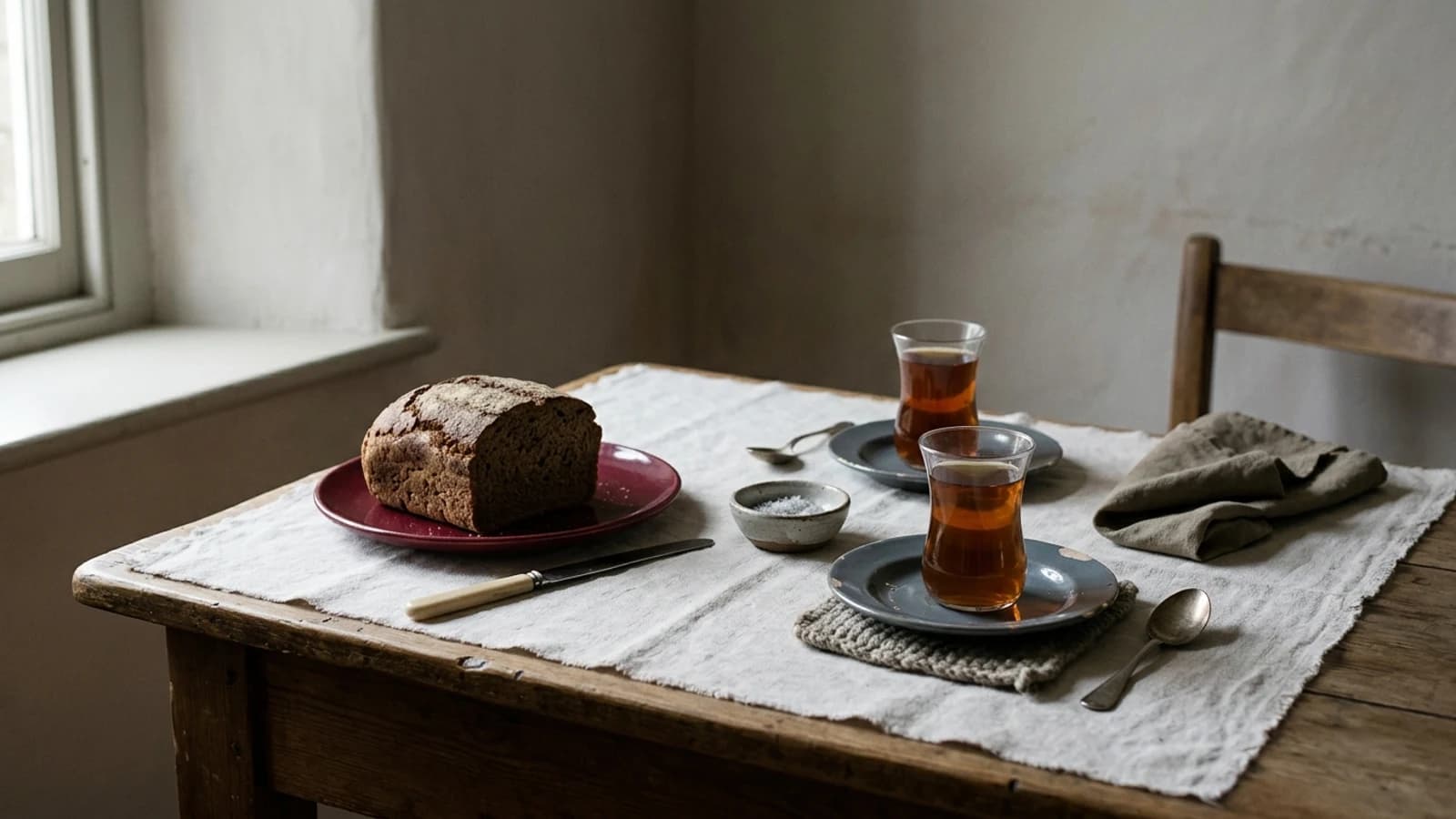
Both countries drink tea constantly, and both treat making it as the correct first response to a person arriving. The forms differ — Turkish *çay* in a tulip glass from a double pot, Polish *herbata* in a mug, often with lemon — but the reflex is identical.
A handful of everyday phrases line up almost exactly:
- herbata and çay — the same constant offer.
- Smacznego and Afiyet olsun — said before eating, and meaning the same thing.
- gość w dom and misafir — the guest, and the obligation that comes with one.
- pierogi and mantı — filled dough, with something dairy on top.
- chleb ze solą and ekmek — bread treated as more than food.
Coffee is the interesting case. Polish *kawa* comes from Turkish *kahve*, and the drink arrived in Poland along the same seventeenth-century routes as the word — as covered in words that travelled.
Bread, and what is done with it
Bread carries weight in both cultures beyond its function. In Polish tradition, guests are greeted with bread and salt — *chleb ze solą*. Turkish custom holds that bread is not thrown away; stale bread is set aside rather than binned, and there is real discomfort at seeing it wasted.
Neither practice was borrowed from the other. They arose separately, in two agrarian societies that knew hunger. The result is two people who can sit at the same table and be quietly relieved by each other's manners.
The guest
Polish has the phrase *gość w dom, Bóg w dom* — a guest in the house is God in the house. Turkish treats *misafir* with a comparable, near-obligatory hospitality: the guest is fed first, refusal of food needs negotiating, and leaving quickly is faintly insulting.
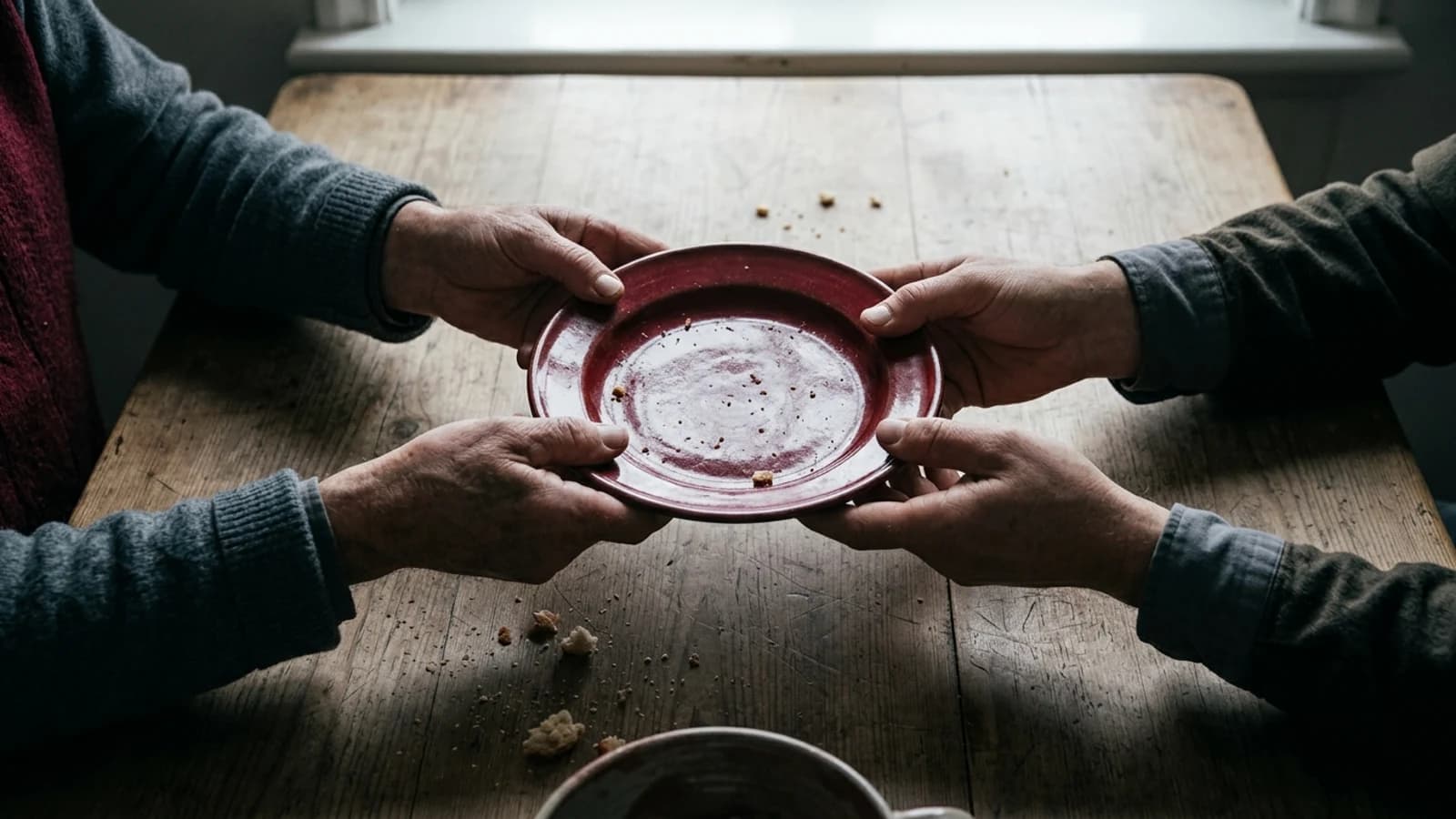
The practical consequence for newcomers is worth stating: in both cultures, an invitation home is a significant gesture rather than a casual one, and declining it reads as a bigger refusal than the person declining usually intends.
Where they genuinely differ
- Alcohol. Polish social life is more likely to involve it; Turkish social life often does not. Neither side should assume.
- Directness. Poles are typically blunter in conversation than the indirect, face-preserving register of much Turkish social speech. Turkish newcomers routinely misread Polish directness as coldness; it is not.
- Punctuality. Polish appointments start on time. Social timing in Türkiye is more elastic. This causes more friction than any large cultural question.
- Family proximity. Turkish family involvement in adult life is typically closer and more continuous.
Both cultures answer a knock at the door by putting the kettle on. The disagreements start about half an hour later, and are all survivable.
Dumplings
It must be mentioned. Poland has *pierogi*; Türkiye has *mantı*. Both are filled dough, both are served with something dairy on top — sour cream, or yoghurt with garlic — and both are claimed as national. The honest position is that filled dumplings are one of humanity's convergent inventions and everyone from Kraków to Xi'an arrived at them independently.
That is a decent summary of the whole relationship: two peoples who arrived at similar answers separately, and then spent six hundred years noticing.
If you have just arrived in Poland, the guides cover the practical side. If you want the people, that is what membership and the clubs are for.